
Maximising Impulse Sales: Effective POS Display Techniques for Pubs & Restaurants
- James Kirk Synergy
- Aug 26, 2025
- 6 min read

Great point-of-sale (POS) displays can be the silent members of your team—selling while your staff are busy pulling pints, carrying plates, or taking payments. In pubs, casual dining and leisure settings, small, well-placed prompts can turn “just a drink” into “drink + snack”, nudge diners towards a dessert, or upgrade a spirit to a double. This guide shows you, in practical, plain English, how to plan, place, design and measure POS so it reliably boosts basket size and improves guest experience.
In a hurry? Here’s the quick summary
Put simple, single-message displays in high-traffic, high-dwell spots: bar tops, tills, table centres, queue lines, entrances and outdoor pavement areas.
Choose one goal per display: add-on, trade-up, trial or time-bound special—and say it clearly.
Keep copy short: a benefit-led headline, the price, and one nudge (e.g., Limited time, Best seller, Locally brewed).
Use hardware that suits hospitality: wipe-clean table talkers, chalkboards, snap frames, acrylic menu holders, wobblers and pavement signs.
Match offer to moment: salty snacks with lager; hot drinks after meals; low/no alcohol and comfort food in January; spritzes and sharing serves in summer.
Refresh weekly: same stand, new message. Stale displays stop working fast.
Make it easy for staff: put the display where they naturally talk to guests and give them a one-line prompt to use.
Measure simply: track attach rate (e.g., snacks per 100 pints) or uplift vs. last week. Keep the winner; drop the rest.
Stay accessible and compliant: large type, high contrast, allergen and ABV clarity, and responsible-drinking cues.
Rinse and repeat: plan seasonal rotations and small tests all year round.

What “impulse” really means in hospitality
Impulse sales are the small, easy “yes” decisions guests make without planning ahead. In pubs and restaurants, they often fall into four buckets:
Add-ons – crisps, nuts, olives, sauces, sides, garlic bread, extra toppings.
Trade-ups – a premium mixer, a double measure, a better gin, a larger glass of wine, or a speciality coffee instead of standard.
Trials – a guest tries something new because it’s clear, low risk and looks good (seasonal beer, limited dessert, bar snack flight).
Time-bound specials – happy hour, pre-theatre bites, match-day buckets, Sunday puddings.
Your POS should be set up to create these outcomes at natural decision points, using small, specific nudges—not long lists or generic posters that try to do everything at once.
Where POS works best: the hospitality “hotspots”
Think about footfall (how many see it), dwell time (how long they look) and decision proximity (how close they are to saying “yes”). The golden locations:
Bar top & back bar
Why it works: high footfall, guests wait and scan the environment.
What to use: countertop chalkboards, A5/A6 acrylic holders, clip-on wobblers, branded bar runners with a single message.
What to say: snacks, upgrades, “ask us about today’s cask”, “double up for £X”, “house spritz”.
Till/PDQ area
Why it works: last look before paying; great for a final add-on.
What to use: small, portrait holders with a single, bold price point.
What to say: “Fancy a brownie to go? £2.50”, “Add fries for £1.50”.
Table centre (dining and lounges)
Why it works: long dwell time and relaxed reading.
What to use: table talkers, tent cards, mini-easels, wooden blocks with slotted cards.
What to say: desserts, sharing plates, low/no options, kids’ treats, QR for specials.
Entrances, host stands & queue lines
Why it works: guests decide before they sit; queues invite reading.
What to use: snap frames, slim A-boards, suspended cable frames.
What to say: “Weekday lunch for under £10”, “Match-day platter”, “Book your Sunday roast”.
Collection points & pass
Why it works: takeaway guests and delivery riders wait; easy to upsell a drink or sweet.
What to use: countertop holders, magnetic frames on metal surfaces.
What to say: “Add a drink for £1”, “Try our house cookie”.
Outdoor pavement & beer garden
Why it works: capture passers-by and set expectations.
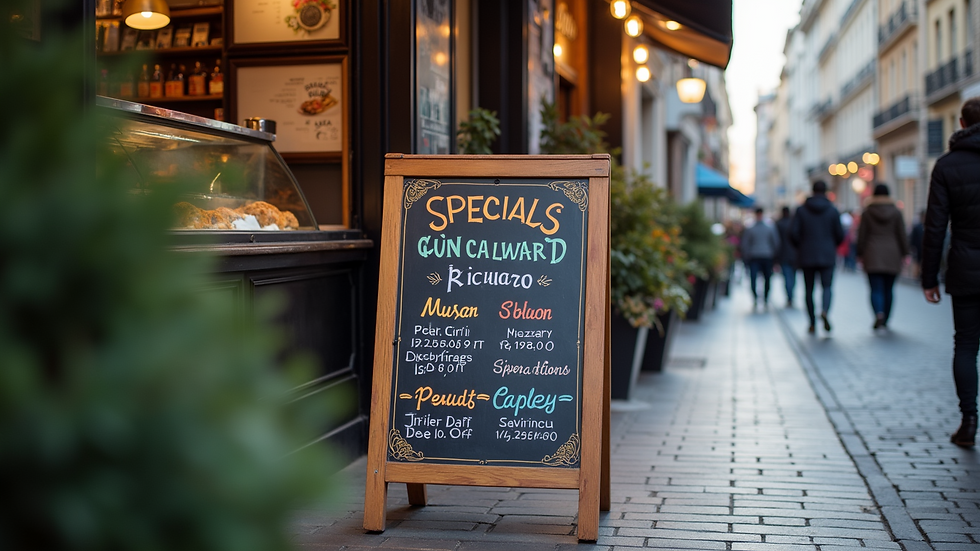
What to use: weather-proof A-boards, swing signs, snap frames in sheltered areas, chalk A-frames.
What to say: “Today: steak & ale pie + pint £X”, “Sun terrace open”, “Dog-friendly, water bowls inside”.
The rule of thumb: one message per site line. From any guest vantage point, they should see a single, clear idea—never a wall of offers that fight for attention.
Decide the job for each display (and stick to it)
Before you design anything, write down the job it must do. Choose one:
Add-on: “Make it easy to add X to Y.”
Trade-up: “Make the premium choice feel popular and good value.”
Trial: “Reduce risk and spark curiosity.”
Time-bound: “Create urgency without pressure.”
Everything else—copy, colour, price, placement—should support that single job.
Simple copy that sells (without being shouty)
Keep wording short and specific. A reliable structure:
Headline (benefit or name): Crispy Halloumi Fries
Support (one proof): Our most-shared side
Price (clear and near): £5.50
Nudge (one cue): Perfect with a pale ale
Other useful cues:
Scarcity: This week only, Small batch, Limited hops.
Social proof: Best seller, Local favourite, Award-winning.
Ease: Ready in 5 minutes, Add to any main, Swap your mixer.
Avoid jargon and long sentences. If it takes longer than three seconds to “get it”, it’s too complicated for a bar top.
Design basics for maximum legibility
You don’t need an art degree. A few simple rules go a long way:
Type size & hierarchy: Big headline, medium price, small proof. On table talkers, aim for a headline readable from 1–2 metres.
Contrast: Light on dark (chalkboard) or dark on light; avoid mid-tone on mid-tone.
Whitespace: Let the content breathe. One image, not five.
Colour: Use brand colours sparingly to highlight price or the call-to-action.
One focal point: Photo of the hero item (appetising, well-lit) or a bold typographic headline—not both fighting.
Icons that earn their keep: Vegan, gluten-free, low/no, ABV %—only if they help the decision.
Print quality: If it’s printed, keep it crisp and replace as soon as it scuffs; tired prints signal tired offers.
Chalkboards remain hospitality workhorses because they’re fast to update and feel warm and human. If handwriting is a challenge, use simple stencils for numbers and price points to keep things tidy.
Hardware that thrives in pubs and restaurants
Choose durable, easy-clean fixtures that suit your layout:
Table talkers & tent cards: Perfect for desserts, spritz menus, kids’ deals, hot drinks.
Acrylic menu holders (A5/A6): For bar tops and tills; quick to refresh inserts.
Chalkboards (countertop & A-frame): Flexible, characterful, and great outdoors if sealed.
Snap frames: Wall-mounted, quick-change; ideal for entrances, loos, corridors, function rooms.
Wobblers & shelf strips: Small but punchy at eye level in fridges or back bars.
Magnetic/adhesive frames: Add messaging to fridges, drip fridges, metal back bars without drilling.
Pavement signs: Draw footfall from the street; keep messages large and few.
Menu blocks & clipboards: Swap pages fast for lunch/dinner or weekday/weekend.
Queue barriers with clip frames: Turn waiting time into selling time.
Look for UK-made, wipe-clean surfaces, water-resistant finishes, and standard paper sizes (A4/A5/A6) to simplify reprints.
Match the message to the moment
Impulse works best when it fits the guest’s current mindset:
Pre-order / queue: “Happy Hour 5–6pm”, “2 small plates + drink £X”.
At the bar: “Add olives for £2”, “Double up for £1.50”, “Try our house lager”.
At the table (pre-meal): “Sharing starters”, “Spritz of the week”.
During the meal: “Upgrade your sides”, “Premium sauces”.
After the meal: “Sticky toffee pudding £5”, “Espresso martini £7”, “Irish coffee £5.50”.
Takeaway/collection: “Add a brownie £2.50”, “Cold cans £1 with any pizza”.
Think of the whole guest journey and place relevant prompts at each step.
Offer types that reliably move the needle
Add-ons
Salty snacks with beer: crisps, nuts, pork scratchings, olives.
Quick sides with mains: fries, slaw, garlic bread, onion rings.
Coffee accompaniments: biscotti, brownie bites, mini dessert.
Trade-ups
Spirit upgrades: premium gin/whisky; double for £X.
Better mixers: premium tonic, ginger beer, soda alternatives.
Wine sizing: 175ml → 250ml, or bottle vs. glass value cues.
Burger upgrades: cheese, bacon, avocado, gluten-free bun.
Trials & specials
Flight boards: three small beers/ciders; great for local breweries.
Seasonal heroes: spritz in summer, mulled options in winter.
Limited desserts: “Baker’s tray”, “Pie of the day”.
Bundles & deals
Lunch bundles: main + soft drink under a round number (£10/£12).
Match-day buckets: 4 beers + sharer £X.
Family sharers: pizza + sides + jug of softs.
Make prices round and memorable. A simple, fair price on the card beats “from” pricing that forces mental maths.
Placement, sightlines and dwell time (the unglamorous wins)
Height matters: Bar top and eye level beat knee height. On tables, keep cards upright and facing the flow.
Face the traffic: Angle countertop signs towards where guests stand and pay, not parallel to the bar edge.
One per view: If you can see three different offers from one spot, you’ve got too many.
Lighting: Don’t hide signs in dark corners. A small clip light over a back-bar frame can double visibility.
Avoid clutter traps: Till areas get messy; choose holders with small footprints and make them the only thing allowed next to the PDQ.
Keep hands free: Free-standing, stable units are better than flimsy, easily knocked signs that end up behind the bar.


Comments